
South African Foundry Chromite Sand: Low Thermal Expansion & Anti Burn-On, Selection Guide as Facing Sand for Steel Casting
Veining, metal penetration and burn-on are common defects in the production of stainless steel, manganese steel, high-alloy steel and heavy-section steel castings. Many foundries choose South African foundry chromite sand as facing sand to improve casting quality.
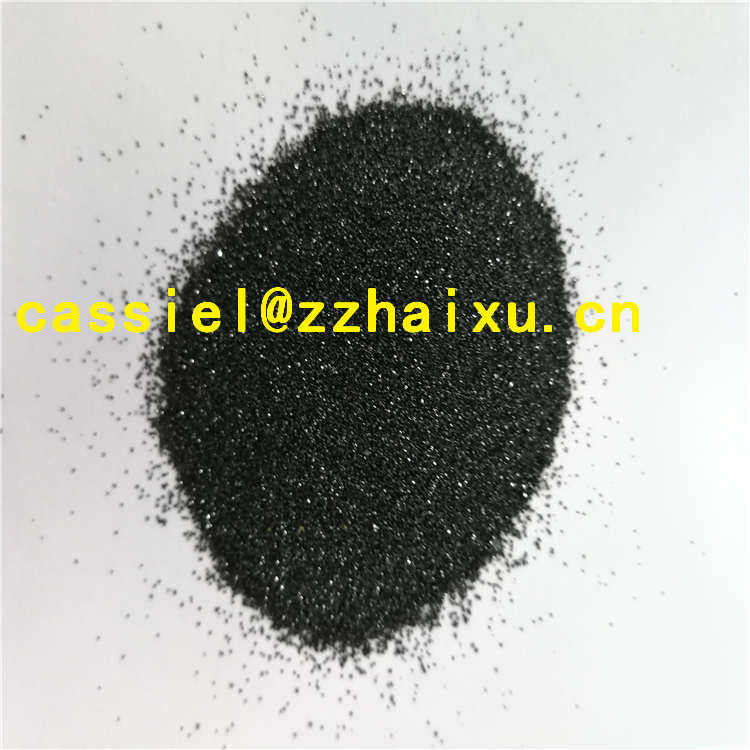
Zhengzhou Haixu Abrasives supplies South African-origin foundry chromite sand with Cr₂O₃ ≥46%. The raw ore is processed by washing, drying, dedusting, magnetic separation and sieving. AFS grain grading is strictly controlled for stable batch performance.
Core Advantages
- Low thermal expansion to prevent veining Chromite sand has much lower thermal expansion than silica sand. It barely deforms under pouring heat and effectively avoids veining, ideal for resin sand and water glass sand steel casting processes.
- Self-sintering property for excellent anti burn-on performance A thin dense sintered layer forms on the surface when touching molten steel. It blocks metal penetration and greatly reduces burn-on, cutting the workload of grinding and cleaning.
- Good chilling performance for sound casting structure Higher thermal conductivity than silica sand promotes directional solidification, reduces shrinkage cavities and refines grain structure, suitable for heavy-section castings.
- High chemical inertness & good slag resistance It is stable against alkaline slag from manganese steel and stainless steel melting, compatible with resin self-hardening sand, lost foam and shell molding processes.
Key Selection Points for Steel Casting Facing Sand
- Chemical indicators Focus on Cr₂O₃, SiO₂ and ADV (Acid Demand Value). High SiO₂ weakens anti-penetration performance. High ADV disturbs resin curing. COA is available for each batch; SGS third-party inspection is acceptable.
- AFS grain size matching
- AFS40–45: Better permeability for large & heavy steel castings
- AFS45–50 / AFS50–55: Better surface finish for small & medium stainless steel precision castings Narrow particle size distribution is required. Mixed fine and coarse grains hurt both permeability and anti-penetration effect.
- Grain shape & reclamation rate Round-shaped grains with low breakage loss achieve high reclamation rate and lower long-term foundry cost. Excess fines will reduce permeability and raise gas defect risk.
- Distinguish foundry chromite sand and refractory chromite flour Granular chromite sand is used for facing sand and core sand. Chromite flour is for magnesia-chrome bricks, kiln glaze and foundry coating. They are not interchangeable.
Notes on Application
Chromite sand has high density, which requires adjusted mixing sequence. Dust protection is necessary during operation. Keep it dry in storage to avoid caking.
Zhengzhou Haixu Abrasives provides 1MT jumbo bags and 25kg small bags. Trade terms including FOB, CIF, DAP and DDP are supported for global foundry customers.