
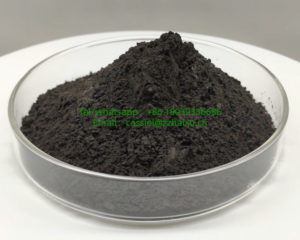
South African chromite ore powder is the dominant natural green‑coloring raw material for soda‑lime‑silica container glass. It develops color mainly via trivalent chromium Cr³⁺ with synergistic iron‑toning effect. It is widely used to produce olive‑green, tea‑green and dark‑green glass, and can also be formulated for amber glass. Typical applications include beer bottles, beverage bottles and light‑proof essential‑oil bottles.
1. Chemical Composition Advantages
- Cr₂O₃ ≥ 46% with well‑balanced chromium‑iron ratio The natural chromium‑iron ratio stays stable at approx. 1.55:1. In‑situ iron works together with chromium to form the classic olive‑yellow‑green shade for beer bottles, requiring little extra iron oxide. Ores from other origins feature volatile Cr/Fe ratio and tend to cause color deviation.
- Low SiO₂ content: SiO₂ ≤ 1.0% Indian chromite normally contains 4‑6% SiO₂; Turkish ore 2‑4%. Excess silica impurities easily form silica stones, bubbles and black specks at high temperature and raise glass reject rate. South African low‑silica ore delivers purer melt with fewer stone and black‑spot defects.
- Very low harmful impurities: CaO ≤ 0.3%, minimal S & P Excessive calcium triggers devitrification. Sulfur and phosphorus induce bubbles and blister defects. Beneficiated South African ore keeps impurities well‑controlled, complying with safety standards for food‑contact glassware. No hexavalent chromium forms during high‑temperature melting.
2. Coloring & Optical Performance Advantages
- Stable color performance, high tolerance to furnace fluctuation Melting point approx. 2180 °C, fully resistant to glass melting temperature 1400‑1550 °C. Trivalent chromium remains stable under oxidizing atmosphere. Minor furnace‑temperature drift brings little shade shift, securing batch‑to‑batch color consistency for mass production lines.
- Built‑in UV‑shielding capability Combined chromium‑iron ions strongly absorb 300‑400 nm ultraviolet radiation. It blocks UV light to prevent sun‑struck off‑flavor for beer and fruit wine and extend shelf‑life, offering functional protection beyond aesthetics.
- Excellent light‑fastness & weather resistance, no fading Color ions dissolve into the glass network permanently. No discoloration upon sunlight exposure or aging.
- Flexible color‑tuning capacity Mix with copper oxides for blue‑green tones; blend with manganese / sulfur to produce amber‑brown glass. Multiple color variants achievable with one base raw material.
3. Process & Cost Advantages
- Substantial cost saving vs synthetic chromium oxide green Cost is 30‑50% lower than chemical‑grade Cr₂O₃, delivering outstanding economic benefits for large‑volume container‑glass manufacturing.
- Good dispersibility Processed into 325 / 400‑mesh fine powder with water‑washing desliming. Homogeneous mixing in batch formula minimizes streaking and mottling and improves finished‑product yield.
- High compatibility with soda‑lime‑silica glass system Does not damage glass network structure. No negative impact on mechanical strength or thermal stability. Can directly replace part of quartz and feldspar feedstock without major reformulation.
4. Supply‑Chain Stability
South Africa is the world’s largest chromite exporter. Large‑scale ore blending & beneficiation guarantee narrow batch‑to‑batch variation, suitable for long‑term bulk procurement by glass plants without frequent coloring‑formula readjustment.
Supplementary Comparison: South African Ore vs Other Origins
| Origin | Main Weaknesses for Glass Coloring |
|---|---|
| Indian chromite | High SiO₂, prone to stone defects, unstable color tone |
| Turkish chromite | Volatile impurities, obvious batch color difference |
| South African chromite | Low silica, balanced Cr/Fe ratio, stable batch performance |