
Differences between Chromite flour and Chromium Oxide Green for Glass Coloring
- Chemical Composition
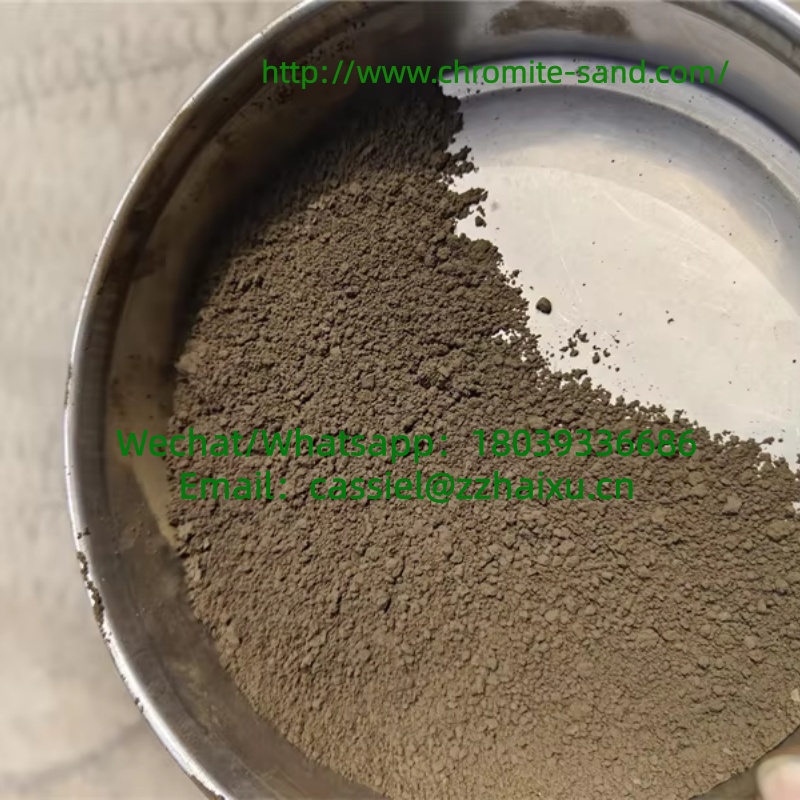
- Iron chromite flour /Chromite Powder: Natural chromite mineral (Fe,Mg)Cr₂O₄, Cr₂O₃ content 40‑46%, contains inherent iron, magnesium impurities.
- Chromium Oxide Green: Synthetic high‑purity Cr₂O₃ ≥98%, nearly free of iron impurities.
- Color Tone in Glass
- Iron chromite flour /Chromite Powder:Composite coloration by Cr³⁺ plus iron ions. Produces olive green, dark bottle‑green, tea‑green with yellow undertone. Can form dark tea‑black under reducing atmosphere. Excellent UV‑blocking performance. Slight batch‑to‑batch color shift exists from mineral source variation.
- Chromium Oxide Green: Coloration only from Cr³⁺ ion. Delivers bright pure emerald / gem green with minimal yellow tint. High color reproducibility, very low batch deviation. Cannot easily make dark black glass.
- Cost & Application
- Iron chromite flour /Chromite Powder:: Cost‑effective. Mainly for mass‑produced beverage bottles, beer bottles, wine bottles, light‑shielding packaging glass.
- Chromium Oxide Green: Higher material cost. Applied for high‑end art glass, decorative tableware glass where clean bright green color is required.
- Melting Process Feature ‑ Chromite powder: Good high‑temperature stability, but color is sensitive to furnace oxidation‑reduction atmosphere due to iron content. ‑ Chromium Oxide Green: Less sensitive to atmosphere, consistent hue; requires sufficient melting to avoid undissolved crystal speckles.