
Chromite powder produces olive-green color mainly by Cr³⁺. Once converted to Cr²⁺, the color shifts to bluish‑grey. Chromite naturally contains associated iron. Five root causes for color difference are: Cr₂O₃ content, Fe₂O₃ content, kiln atmosphere, powder fineness, and batch mixing uniformity.
Quick Phenomenon Identification
- Color fluctuates between batches → Variation in Cr₂O₃ feeding or mineral composition
- Within the same kiln, products show yellow‑green on one side and bluish‑grey on the other → Oxidation‑reduction atmosphere fluctuation (most frequent issue)
- Local spots or streaks within one batch → Insufficient powder fineness, poor mixing, incomplete melting
I. Raw Material Adjustment (Priority Control. Mineral composition fluctuation of chromite powder is the No.1 trigger)
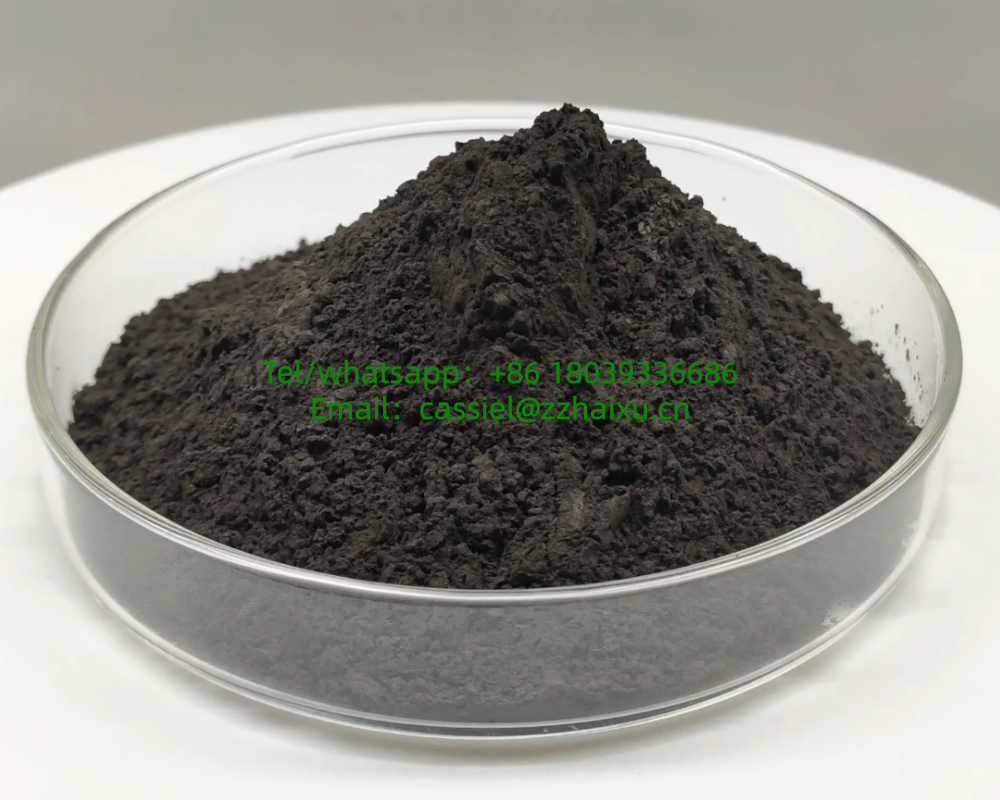
Lock fixed specifications and perform incoming inspection for chromite flour. Key indexes to monitor: Cr₂O₃, total iron (Fe₂O₃), particle size and moisture. Do not only focus on Cr₂O₃ alone.
- Chemical indexes: Cr₂O₃: 44‑46%; Fe₂O₃: 26‑28%. Iron content directly controls yellow tone strength. Higher Fe gives more olive‑yellow tone; lower Fe yields emerald‑green tone.
- Particle size: 325 mesh or finer is recommended. Coarse chromite spinel dissolves slowly and causes color spots and streaks. Keep consistent particle‑size across batches; avoid mixing 200‑mesh and 325‑mesh materials.
- Conduct small‑scale melting test panels for new ore‑source batches from the same supplier. Test L/a/b values with color difference meter. Approve mass production only after passing. Do not directly feed different ore‑source materials by silo mixing.
- Raw material pre‑homogenization: Pile, spread and turn over bulk chromite powder upon arrival. Or blend multi‑point samples per batch to guarantee uniform Cr and Fe distribution for the whole lot.
- Stabilize base raw materials: Fix Fe₂O₃ level for quartz sand, soda ash and dolomite. Extra iron introduced from base raw materials will amplify yellow cast and cause uncontrolled yellowish green glass.
II. Formula Fine‑tuning (For color depth or yellow‑blue shift)
Run small crucible test pieces first. Proceed to full‑scale production only when ΔE meets requirements. Make minor adjustments each time.
- Too light color (high L value): Slightly raise chromite powder dosage, calculate based on effective Cr₂O₃ content instead of simple weight increment of raw ore powder.
- Too dark color (low L value): Reduce chromite powder dosage in small increments.
- Green with excessive yellow cast (high +b value): Option 1: Switch to chromite powder grade with lower Fe₂O₃ Option 2: Add trace oxidizing agent to suppress Fe²⁺ formation
- Bluish‑grey & dull color (negative a value): Typically caused by reducing atmosphere, cannot be solved merely by adding more chromite powder. Add oxidizers such as sodium nitrate / potassium nitrate to eliminate Cr²⁺. Meanwhile reduce reducing agents including carbon powder, coal dust and wood chips in batch materials.
Normal dosage range for soda‑lime bottle glass: Calculated Cr₂O₃ contribution from chromite powder: 0.3‑1.8%. Mainstream for olive beer‑green glass: 0.8‑1.5%.
III. Melting Kiln Atmosphere Control
✅ Target condition: Weak oxidizing atmosphere to stabilize chromium as Cr³⁺. Oxygen deficiency or fuel‑rich reducing condition: Cr³⁺ converts into Cr²⁺, resulting in bluish‑grey dull glass and cross‑kiln color deviation.
Adjustment measures:
- Stabilize air‑fuel ratio, appropriately increase combustion air. Avoid prolonged low‑oxygen combustion.
- Add a small amount of sodium nitrate (oxidizer) into batch materials to stabilize Cr³⁺ and counteract local reducing zones. Do not over‑dosage to prevent bubble defects.
- Strictly control carbon‑containing impurities in batch materials. Remove carbon contaminants, paper residues and oil stains from cullet.
- Keep stable cullet ratio. Fluctuating cullet ratio brings variable reducing agents and iron impurities. Pre‑blend cullet batches.
IV. Batching, Mixing & Melting Process
- Weighing accuracy: Chromite powder is a trace colorant, use high‑precision scales. Manual small‑ingredient errors easily trigger batch‑to‑batch color difference. Pre‑mix masterbatch (chromite powder premixed with soda ash) before adding to main batch to improve dispersion.
- Mixing: Maintain fixed mixing duration for full dispersion of mineral powder. Stabilize material moisture; agglomerated powder creates color spots and streaks.
- Melting temperature & holding time
- Too low temperature: Incomplete dissolution of chromite spinel, pale color plus black specks.
- Excessively high temperature: Chromium volatilization leads to faded color. Kiln temperature fluctuation directly induces color deviation.
- Stabilize pile position, feeding sequence and batch layer thickness. Ensure consistent melting, refining and homogenization duration.
- Stable kiln pressure: Fluctuating negative pressure causes air ingress or local oxygen shortage and transverse color difference.
V. Forming & Inspection Management
- Wall‑thickness influences L value: Visual color difference may arise from uneven article wall thickness instead of colorant variation. Stabilize gob weight and forming parameters.
- Standardized color‑difference testing: Adopt D65 light source and fixed sample thickness. Sample and measure Lab* values every 2 hours or per kiln run with color‑difference meter. Set internal control ΔE ≤2.0 as acceptable. Retain standard reference samples.
- Cullet management: Store recycled green cullet separately. Avoid mixing with clear or amber cullet. Maintain fixed cullet proportion; abrupt cullet percentage change alters color tone directly.