
easons for Preferring 325‑Mesh Iron Chromite Flour for Bottle Coloring
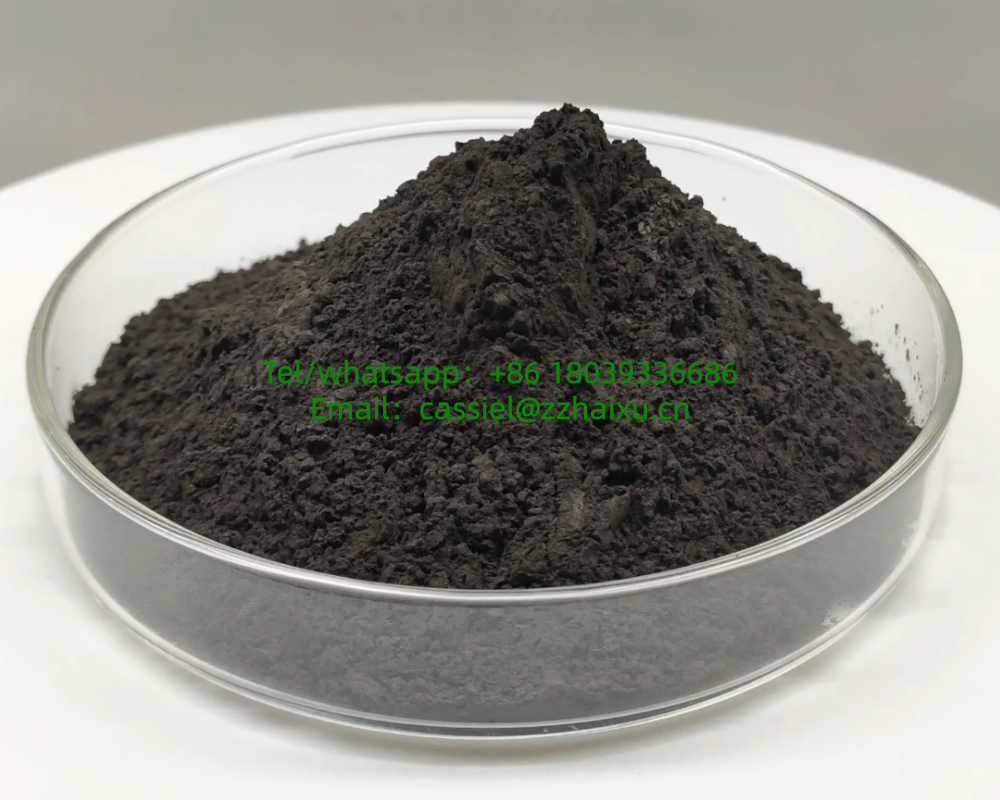
325‑mesh iron chromite flour has a maximum particle size of ≤45 μm. It is the optimal particle size for mass‑producing green beer and beverage bottles, balancing melting performance, coloring uniformity and production cost.
- Sufficient Melting to Avoid Black Spots and Stone Defects Iron chromite features a high melting point (approx. 2150 °C), while glass furnaces only run at 1400‑1550 °C, so over‑large particles should be avoided.
- 200‑mesh iron chromite flour (74 μm): Larger particles whose inner cores cannot be fully melted. Unmelted residues tend to form black spots and mineral stones, resulting in rejected glass bottles.
- chromite flour 325‑mesh (≤45 μm): It achieves full melting and reaction under bottle‑glass melting temperatures. Hardly any unmelted particles remain, greatly reducing defective rates caused by color mottling and black spots.
- 46% Cr₂O₃ iron chromite flour of 400‑mesh and finer grades: Better melting performance yet sharply higher grinding costs. Such fine flour also causes heavy dusting and batching caking, which is unnecessary for ordinary mass production.
- Good Flour Dispersion for Consistent Bottle Color 325‑mesh flour has a narrow particle‑size distribution and hardly segregates during raw‑material mixing. Cr³⁺ ions diffuse evenly into the glass lattice:
- Consistent olive‑green / beer‑green shade across production batches; no local streaks or blotches of uneven color.
- Uniform UV‑blocking performance, ensuring stable light‑proof preservation for beer and beverages.
- Optimal Comprehensive Production Cost (Key for Mass Production)
- Drawbacks of 200‑mesh iron chromite flour: High risk of product rejection due to defects.
- Drawbacks of 400/600‑mesh iron chromite flour: Higher grinding energy consumption and purchase cost. Though melting is improved, it is not cost‑effective for large‑scale continuous furnace operation at glass plants.
Particle‑Size Selection Reference Table
| Specification | Particle Size | Application Scenario |
|---|---|---|
| 200 mesh | ≤74 μm | Low‑grade ordinary green bottles; high risk of black‑spot defects |
| 325 mesh | ≤45 μm | First‑choice for mass‑producing beer & beverage bottles; best cost‑performance |
| 400 mesh | ≤38 μm | Mid‑to‑high‑end fruit‑wine & premium beverage bottles; finer color rendering |
| 600‑800 mesh | ≤23 μm | Translucent light‑green high‑grade art glass bottles; high cost |
Supplementary note: Apart from particle size, key specifications for glass‑grade iron chromite flour: Cr₂O₃ ≥46%, SiO₂ ≤1.0%. South‑African ore sources deliver the most stable quality.