
Application of Chromite Powder in Glass Bottle Industry
1. Core Function: Stable Coloring for Dark Glass Bottles
- Main color tones: green series, tea green and olive green
Chromic oxide () contained in chromite is a high-temperature resistant green colorant with excellent chemical stability during glass melting, without color separation or fading.
- Beer bottles: classic dark emerald green and olive green (the most mainstream application)
- Beverage bottles & sauce glass bottles: dark green and tea green
- Cosmetic and essential oil glass bottles: light-proof dark green

- Color advantages
Compared with synthetic chromium oxide green, natural chromite powder features lower cost and better high-temperature adaptability, making it highly suitable for mass production in glass furnaces with rich and saturated color tone.
2. Auxiliary Key Functions for Glass Bottle Manufacturers
UV blocking & light shielding protection
Chromium-tinted green glass can block ultraviolet rays and short-wave visible light, preventing oxidation and deterioration of beer, drinks, essential oils and potions, and effectively extending the shelf life of contents. This is the fundamental reason for the large-scale use of chromite powder in beer bottles.
Decolorization and impurity color elimination
Common quartz sand raw materials usually contain iron impurities, which cause yellowing, gray haze and poor light transmittance.
Chromium components in chromite powder achieve complementary color matching with iron ions, neutralizing yellow and green stray light to ensure uniform and consistent glass color and avoid mottled or dull bottle bodies.
Improve glass melting performance
A small dosage of chromite powder can adjust the properties of glass batch materials, stabilize the high-temperature viscosity of glass liquid, reduce defects such as bubbles, stripes and stones, and lower the defective rate of glass bottles.
3. Processing Technology & Dosage Characteristics
- Mixed directly with basic glass raw materials such as soda ash, quartz sand and feldspar, then fed into the furnace for melting.
- Low addition ratio: conventional dosage ranges from 0.2% to 1.5% to adjust color depth as required.
- Furnace adaptability: fully applicable to conventional glass melting temperatures of 1450–1550℃ for horseshoe flame furnaces and regenerative glass furnaces.
4. Raw Material Selection Standards for Factory Procurement
- Mainly fine chromite powder, with stable content and controllable iron & aluminum impurities as priority indicators.
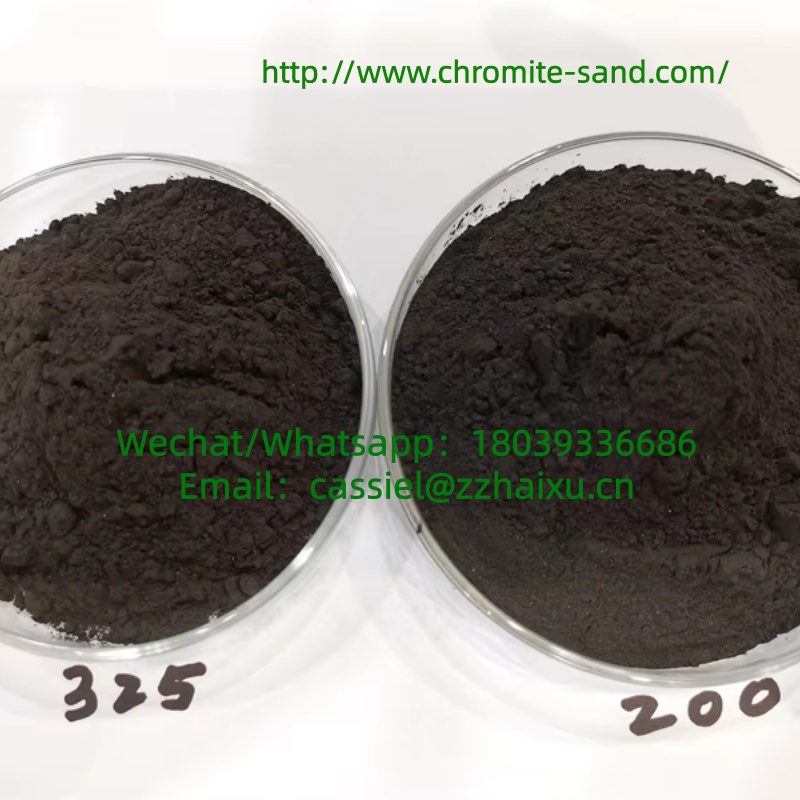
- Fineness: 200–325 mesh is the mainstream specification, ensuring uniform mixing and consistent coloring.
- Low moisture content and no caking to prevent color difference caused by uneven batching.
5. Supplementary Classification
- Natural chromite powder: Mainly used for low-cost mass-produced packaging glass, such as beer bottles and food glass containers, with high cost performance.
- Synthetic chromium oxide green: Applied to high-grade glassware and art glass with high color requirements; higher cost and rarely used for ordinary glass bottles.